December 1, 2025
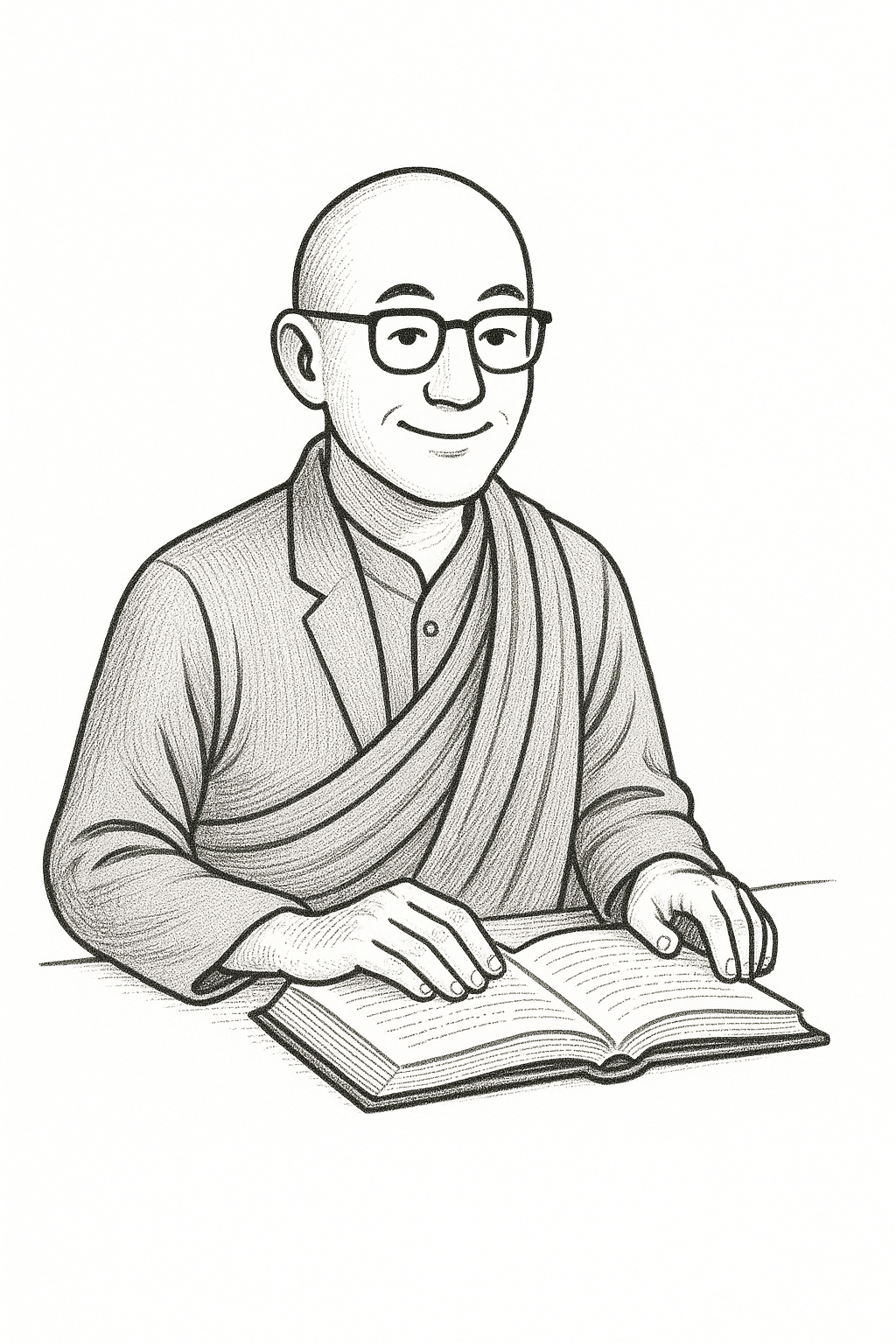
Today's Discourse
A small teaching with enormous weight.
TodayMN 10 — The Foundations of Mindfulness
The Foundations of Mindfulness
"And how, monks, does one dwell contemplating the body as body? Here, a monk, gone to the forest, to the foot of a tree, or to an empty hut, sits down. Having folded his legs crosswise, set his body erect, and established mindfulness in front of him, just mindful he breathes in, mindful he breathes out.
Breathing in long, he knows: 'I breathe in long'; or breathing out long, he knows: 'I breathe out long.' Breathing in short, he knows: 'I breathe in short'; or breathing out short, he knows: 'I breathe out short.'
He trains thus: 'I shall breathe in experiencing the whole body'; he trains thus: 'I shall breathe out experiencing the whole body.' He trains thus: 'I shall breathe in calming the bodily formation'; he trains thus: 'I shall breathe out calming the bodily formation.'"
Summary
The Buddha teaches the four foundations of mindfulness: contemplation of body, feelings, mind, and mental objects. This sutta is considered one of the most important meditation instructions in the entire Pāli Canon. The practice begins with awareness of breathing, extends to all bodily postures and activities, and culminates in clear comprehension of impermanence. Through sustained, gentle attention, one comes to see the arising and passing away of all phenomena. The Buddha declares this path as "the direct way for the purification of beings, for the surmounting of sorrow and lamentation, for the disappearance of pain and grief, for the attainment of the true way, for the realization of Nibbāna."
॰The Monk Reflects
When I first tried to follow my breath, I assumed I was doing it wrong. The mind kept wandering to grocery lists and old arguments and the sound of a car alarm outside. Then I noticed: breathing is happening whether I approve of it or not.
This is the strange gift of the Satipaṭṭhāna: it doesn't ask us to become someone else. It asks us to notice who we already are, breath by breath, sensation by sensation.
The sutta says awareness leads to freedom. I keep finding that awareness also leads to a kind of simple astonishment — the fact that anything is here at all, including this very stubborn mind.
Awe isn't always a thunderclap. Sometimes it's the moment I stop arguing with the morning and let it be morning. Sometimes it's the weight of my feet on cold floor tiles.
There's a passage where the Buddha describes the monk sitting at the foot of a tree. I imagine him there, just sitting. Not striving for enlightenment. Not trying to fix anything. Just breathing and knowing he's breathing.
What would it be like to give ourselves that permission? To sit, even for five minutes, without an agenda. Not meditating to become calmer or better or more productive. Just sitting because sitting is what's happening.
The mind will wander — this is its nature, like water flowing downhill. But wandering is not failure. Noticing you've wandered is the practice itself. Each return to the breath is a small homecoming.
Today, perhaps, we might try this: one conscious breath. Not a hundred, not an hour on the cushion. Just one breath, fully attended. And then another, if we feel like it.
The Buddha called this "the direct way." I think he meant: don't complicate it. You're already here. You're already breathing. Begin with what's already true.
MN 10 — Satipaṭṭhāna SuttaShunryu Suzuki, Zen Mind, Beginner's MindPeter Matthiessen, The Snow Leopard